
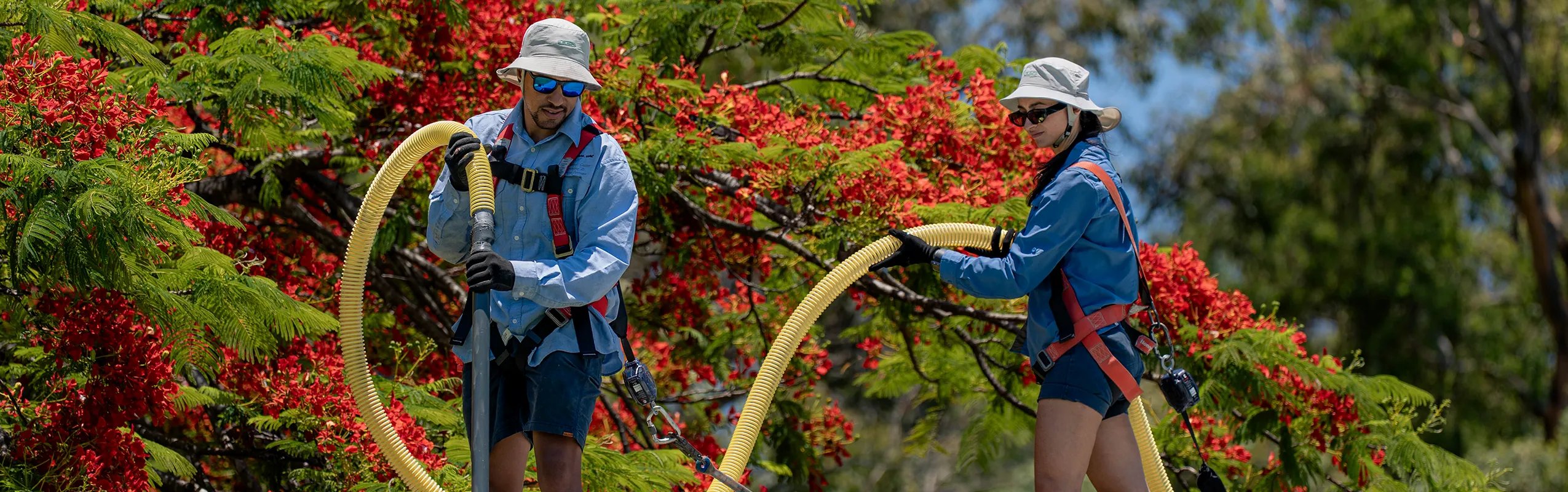
The Gold Coast wet season runs from November through to April. During this period, the region regularly receives intense downpours, with some storms delivering more than 100 mm of rain in a single hour. When your gutters are blocked, that water has nowhere to go and the damage can happen fast.
The frustrating part is that most of the homes we visit after a major storm event have the same story: gutters full of debris, downpipes blocked solid, and water that has found its way into walls, ceilings, or under the slab. In most cases, a single visit before the rains arrived would have prevented it all.
This checklist is designed to help Gold Coast homeowners get their gutters storm-ready before the season hits, so you are not scrambling when the first big cell rolls in off the Coral Sea.
Why Gutters Matter More in South-East Queensland
Gutters are designed to do one job: channel rainwater safely off your roof and away from your home’s foundations and walls. In most parts of Australia, a partially blocked gutter is a nuisance. On the Gold Coast, it can be a disaster.
Here is why the Gold Coast is different:
- Rainfall intensity is extreme. Gold Coast storms regularly exceed 80 to 100 mm per hour at peak intensity, far more than most gutter systems are engineered to handle when restricted by debris.
- The local tree canopy is dense and varied. Hoop pines, eucalypts, paperbarks, and palms all shed leaves, bark, seeds, and fronds that accumulate quickly in gutters.
- High humidity accelerates decomposition. Organic debris in your gutters breaks down into heavy, compacted sludge much faster here than in drier climates.
- Flash flooding is a real risk. Blocked gutters overflow onto fascias and into the roof cavity, and the water does not drain gradually, it comes all at once.
Your Pre-Wet Season Gutter Checklist
Work through the following before October each year. If you are reading this mid-season, do not wait. Clean gutters provide protection right up until the storm hits.
1. Clear all leaf litter and debris
This seems obvious, but it is not just about the visible debris. The compacted sludge that sits at the bottom of gutters, particularly in low-flow areas near downpipes, is often invisible from the ground. A professional gutter vacuum or hand clean is the only reliable method.
2. Flush downpipes
A blockage in your downpipe can back up the entire system. Test each downpipe with a hose at full pressure. Water should flow freely from the top and exit clean from the bottom. If it backs up, bubbles, or overflows at the gutter join, the pipe is restricted.
3. Check gutter fall (the angle)
Gutters are installed at a slight angle to encourage water to flow toward the downpipe. Over time, brackets can sag and the fall can level out or reverse. Look for areas where water pools after rain, as these are prime spots for debris to accumulate and mosquitoes to breed.
4. Inspect for rust, cracks, and joint gaps
The wet season puts maximum stress on your gutter system. A small crack or corroded section in dry weather can become a significant leak when 80 mm of rain hits in an hour. Check joins, end caps, and the back edge of the gutter where it meets the fascia board.
5. Inspect roof valleys
The valleys on your roof, the V-shaped channels where two roof planes meet, collect enormous volumes of debris and direct it straight into your gutters. If your valleys are blocked, your gutters will be overwhelmed within minutes of a heavy storm regardless of how clean they are.
6. Consider gutter guard installation
If you are cleaning your gutters twice a year or more, gutter guard (mesh) is worth serious consideration. A correctly installed aluminium or steel mesh system keeps leaves and debris out while allowing water through. It dramatically reduces maintenance requirements and improves storm performance.
Gold Coast Booking Tip
Book your pre-wet-season clean between August and October. By November, most professional gutter cleaners on the Gold Coast are fully booked. Do not leave it until after the first storm of the season.
Warning Signs Your Gutters Will Not Survive Storm Season
You do not need to get on the roof to spot these warning signs. Most are visible from ground level:
- Water marks or staining on the external walls beneath the gutters, indicating regular overflow
- Rust streaks running down from the gutters, a sign of corrosion that could lead to holes or joint failure under pressure
- Gutters that visibly sag or pull away from the fascia, often caused by the weight of compacted debris and water
- Paint peeling from fascia boards, which means water is consistently getting behind the gutter
- Damp patches on interior ceilings after rain, which means water is entering the roof cavity
- Mosquitoes around the roofline, which is a reliable sign of standing water in gutters
Gutter Guard: Your Wet Season Insurance Policy
For homes surrounded by trees, and most Gold Coast homes are, gutter guard is increasingly seen not as a luxury but as a standard part of a well-maintained home.
The right gutter guard system:
- Prevents the build-up of leaf litter and organic debris between cleans
- Reduces the risk of overflow during intense storm events
- Keeps your gutters free of the standing water that breeds mosquitoes, a significant health concern in Queensland where Ross River fever and dengue are present
- Extends the life of your gutters by reducing corrosive moisture and sludge
- Helps protect your rainwater tank from contaminated inflow
Not all gutter guard systems are equal. For the Gold Coast environment, a heavy-gauge aluminium or galvanised steel mesh with a fine aperture is recommended. It handles both the large debris from palms and hoop pines and the fine material from eucalypts. Plastic mesh systems tend to degrade quickly in Queensland’s UV intensity.
Do Not Wait Until the Storms Hit
Every year, the same pattern repeats: the first major storm of the season causes overflows, water damage, and frantic calls to gutter cleaners who are already fully booked. The best time to have your gutters inspected and cleaned is August or September, before the demand spike and while the debris from the previous summer is still dry and easy to remove.
Whether you need a straightforward clean, a downpipe flush, a full gutter guard installation, or just an honest inspection and quote, Global Vac services the entire Gold Coast region.
Ready to Book?
Do not wait for the wet season to expose your gutter problems. Contact Global Vac today for a pre-wet-season inspection and clean across the Gold Coast. Call 0402 012 312 or visit www.globalvac.com.au.